Sometimes I hear people use the phrase “being present” like it is an elusive thing, one more additional thing in life that they need to get perfect at that they are not doing. The feeling surrounding it is similar to not eating your vegetables. So for education and counseling purposes, it’s time to address it head on (get it??? because our heads?? and mental health?).
Being mindful or present is a simple thing, but it might not be a natural thing in these modern times. It is being where you are, in your body. Noticing what is happening only, not what might happen. Without realizing it, we often get in this state of presence when we are engulfed in an activity, feel happy, or we’re doing something new. We are all capable of being present.
So WHY oh WHY don’t our minds let us get there all the other times?
Our Brain: the Problem or the Solution
One of the main things that keep us from being present is our ability to think about the future and the past.
While this is extremely simplified way to understand it, you can apply it to most of your thoughts. For example, if you’re sitting in your living room right now and look around and see all the things you need to do but haven’t, you’re thinking about the future. Or if you look up and see a picture that brings about memories and you go down a rabbit hole of that time and what all went wrong with it, you’re thinking of the past.
Psychologist call excessive thinking rumination, and it is highly associated with mental health disorders such as depression and anxiety. Buddhists call this phenomenon monkey mind, which is an interesting term that sounds somewhat derogatory. But I think what they mean by that is thinking excessively and uncontrollably is a part of an inescapable evolutionary framework that comes with being human.

So what does it mean that we have a tendency to ruminate on the past and future, or that we experience “monkey mind”?
Our minds left unattended are very negative. Our thoughts drag us back to thoughts and emotions that are painful over and over again, instead of simply experiencing it once. And as a way to get out of the pain we experience when thinking, we tend to leave the present as a way to avoid all this.
This is different for everyone and a million ways to do it, but leaving presence can look like scrolling on your phone, excessive validation seeking, using drugs and alcohol, binge-eating, or playing video games. Being able to be present with our uncomfortable emotions is one hurdle.
Using Self-compassion to Encourage Being Present
Another hurdle is that all of this can be fuel to criticize ourselves- we’re not present, we’re thinking in the past, we’re wrong, we’re bad – if our awareness does not include compassion toward ourselves. How we treat ourselves inside of our own mind matters and it’s one of the hardest things to get a grasp on. But if we disregard what we’re experiencing in our inner world, we will continue to treat ourselves poorly.
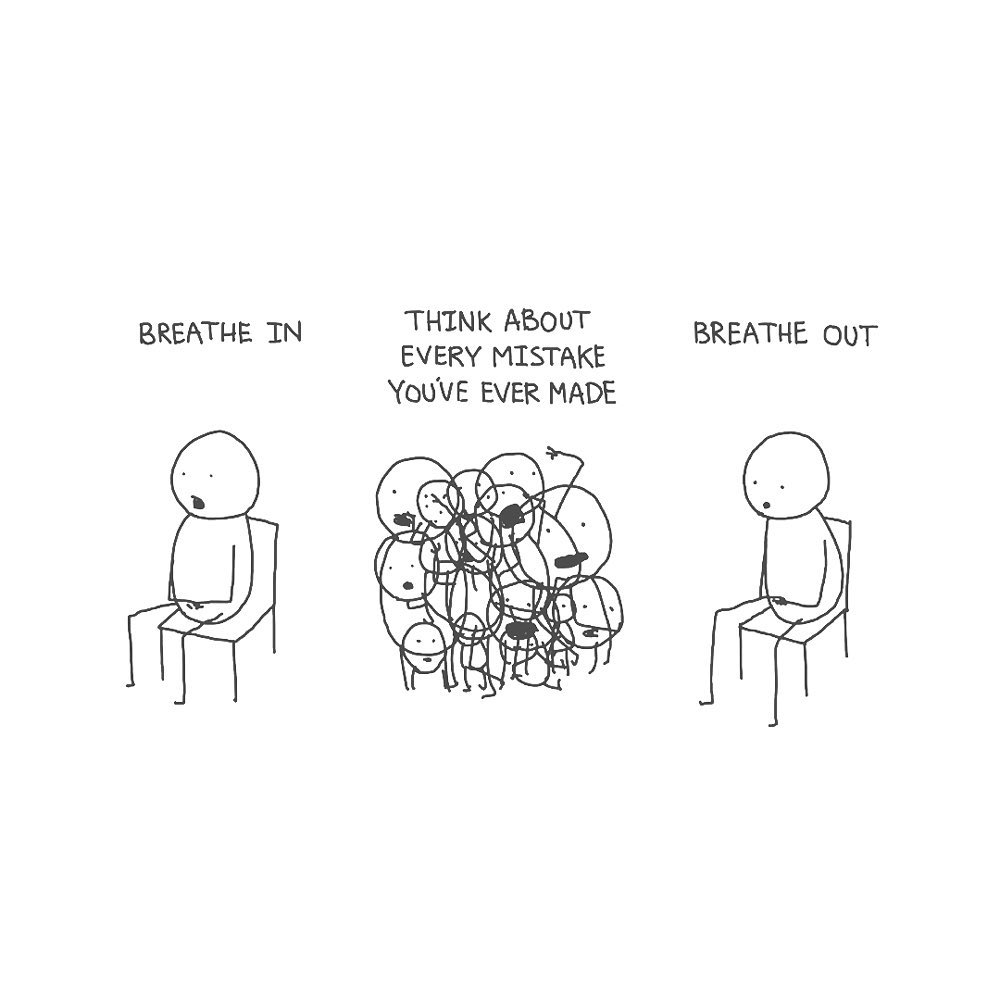
So when we become aware of the fact that we haven’t been present, it can bring us back into the monkey mind in just one fleeting-fell-swoop-moment. The trick is to let go and forgive ourselves for it. Sharon Salzberg’s phrase for this concept is: “we can always begin again.” And it’s true. Each moment is now the real opportunity to do anything about anything.
This moment. No, now this one. Well, now that you’re reading it’s this one. Again, now it’s this one. See? It’s fleeting.
When we notice our thinking has not been very intentional, that our monkey mind has taken over we can…
Begin again.
Take a breath.
Move slower.
Feel your hands, your feet.
Meditate focusing on your breath.
Meditate using a guided video.
Focus your mind on something small in front of you.
Let your mind come back to what’s actually happening around you.
You will get drug back in, because you are human. But see if you can be less hard on yourself the next time you become aware of it all. See if you can give yourself a bit of grace and understanding when you’re not where you want to be. And let yourself come back to presence without the judgement of getting lost from it in the first place.
When we accept the tendencies of our mind, we can get to a place where there is some understanding in being human. Our flaws do not sting so much. Our accomplishments are fleeting and it’s all right. Because when you are present, whatever happens and wherever you go, you’re there with yourself.
 Katheryn Kiker
Leave a comment